Go to Introduction
WHAT ARE THE "2300 DAYS" Daniel 8:14?
This is a bible study about the the meaning of the "2300 days" (KJV) mentioned in Daniel 8:14. It uses a Unicode Greek font and a and is printable.
Hebrew word study on עֶרֶב (Htr. ʽerev) meaning 'evening'
Hebrew word study onבֹקֶר (Htr. boqer) meaning 'morning'
Greek word study on ὀψία (Gtr. opsia) meaning 'evening'
Greek word study on πρωῒ (Gtr. proi) meaning 'morning'
Search this website
- 2300 Days Index
- Introduction
- #1. "2300 DAYS" Daniel 8:14
- #2. CONCLUSION
Introduction
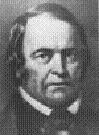 William Miller (picture on left) (1782-1849) was a Baptist minister in America, who interpreted
the 2300 days referred to (KJV) in Daniel 8:14 to literally be 2300 years. According to the prophecy in Daniel, at the end of that
time, the sanctuary would be cleansed. Miller assumed this was referring to the return of Christ to the earth, so starting with a beginning date of 457 B.C., Miller
estimated that Christ would return between March 21st, 1843 and March 21st, 1844. When the year had passed, and Christ had not returned, some of
Miller's followers attributed it to a miscalculation. They set another date: October 22nd 1844. However, the appearance of the Savior still did not take
place then either, and according to some, Miller became very disillusioned after the failure of his prediction. The Millerites, as they were called,
disbanded, and several smaller groups formed.
William Miller (picture on left) (1782-1849) was a Baptist minister in America, who interpreted
the 2300 days referred to (KJV) in Daniel 8:14 to literally be 2300 years. According to the prophecy in Daniel, at the end of that
time, the sanctuary would be cleansed. Miller assumed this was referring to the return of Christ to the earth, so starting with a beginning date of 457 B.C., Miller
estimated that Christ would return between March 21st, 1843 and March 21st, 1844. When the year had passed, and Christ had not returned, some of
Miller's followers attributed it to a miscalculation. They set another date: October 22nd 1844. However, the appearance of the Savior still did not take
place then either, and according to some, Miller became very disillusioned after the failure of his prediction. The Millerites, as they were called,
disbanded, and several smaller groups formed.
The group that eventually developed into present Seventh-day Adventism took Miller's teachings and reinterpreted them. They said that Miller was right
about the time of the prophecy's fulfillment, but that he was wrong about the event of Christ's visible return. Ellen G. White (1827-1915) who is
widely recognized as the founder of modern Adventism, along with her husband, James, was a part of the date-setting movement in 1844. After the
disbanding of the Millerites, she and several others were instrumental in reinterpreting Miller's predictions. It occurred to Hiram Edson, that
instead of Jesus coming to earth, he had entered into the Most Holy of the heavenly sanctuary. Ellen G. White (pictured below right) described it
like this:
 "As the books of record are opened in the judgment, the lives of all who have believed on Jesus come in review before God. ...
When any have sins remaining on the books of record, unrepented of and unforgiven, their names will be blotted out of the book of life,"
"As the books of record are opened in the judgment, the lives of all who have believed on Jesus come in review before God. ...
When any have sins remaining on the books of record, unrepented of and unforgiven, their names will be blotted out of the book of life,"
(Ellen G. White THE GREAT CONTROVERSY Pacific Press Publishing Co. 1911 p483).
This provided the basis for the false doctrine of the modern Seventh-day Adventist movement, that Christ, as part of his atoning work, has been conducting an "investigative judgment" in the heavenly sanctuary since 1844.
#1. "2300 DAYS" Daniel 8:14
DANIEL 8:5-14
5 And as I was considering, behold, an he goat came from the west on the face of the whole earth, and touched not the ground: and the goat
had a notable horn between his eyes.
6 And he came to the ram that had two horns, which I had seen standing before the river, and ran unto him in the fury of his power.
7 And I saw him come close to the ram, and he was moved with anger against him, and smote the ram, and broke his two horns: and there was no power in the ram to
stand before him, but he cast him down to the ground, and stamped upon him: and there was none that could deliver the ram out of his hand.
8 Therefore the he goat became great: and when he was strong, the great horn was broken; and for it came up four notable ones toward the four winds of heaven.
9 And out of one of them came forth a little horn, which became very great, toward the south, and toward the east, and toward the pleasant land.
8 And it became great, even to the host of heaven; and it cast down some of the host and of the stars to the ground, and stamped upon them.
11 Yes, he magnified himself even to the prince of the host, and by him the daily sacrifice was taken away, and the place of his sanctuary was
cast down.
12 And an host was given him against the daily sacrifice by reason of transgression, and it cast down the truth to the ground; and it practiced,
and prospered.
13 Then I heard one saint speaking, and another saint said to that certain saint who spoke, How long shall be the vision concerning
the daily sacrifice, and the transgression of desolation, to give both the sanctuary and the host to be trodden under foot?
14 And he said to me, For two thousand and three hundred days; then shall the sanctuary be cleansed.
DANIEL 8:21-26
21 And the rough goat is the king of Greece: and the great horn that is between his eyes is the first king.
22 Now that being broken, whereas four stood up for it, four kingdoms shall stand up out of the nation, but not in his power.
23 And in the latter time of their kingdom, when the transgressors are come to the full, a king of fierce countenance, and understanding dark sentences, shall stand up.
24 And his power shall be mighty, but not by his own power: and he shall destroy wonderfully, and shall prosper, and practise, and shall
destroy the mighty and the holy people.
25 And through his policy also he shall cause deceit to prosper in his hand; and he shall magnify himself in his heart, and by peace shall
destroy many: he shall also stand up against the Prince of princes; but he shall be broken without hand.
26 And the vision of the evening and the morning which was told is true: therefore shut you up the vision; for it is for many days from now.
Note 1: Consider the context
The whole context of this scripture (Daniel 8) is concerning Daniel's vision. The goat spoken of (v8) was the king of Greece (v21), and the large
horn was Alexander the Great. He died in his prime at the age of 33 (v8) and his four Generals (four notable ones v9) took over his kingdom. The "little horn" is a
type of the Antichrist of the last days, but in this context it is also said to refer to Antiochus IV Epiphanes, who during the last few years of his reign
made a determined effort to destroy the Jewish faith. He captured the temple, and caused the daily sacrifice to cease (v11), but was eventually
overcome by Judas Maccabeus, who recaptured the temple and rededicated it to the Lord on 25th Chislev three years and ten days later, about 165 B.C.
Septuagint - 1 Maccabees 1:54
54 Now the fifteenth day of the month Chislev, in the hundred and forty fifth year, they set up the abomination of desolation upon the
altar, and built idol altars throughout the cities of Judah on every side;
Septuagint - 1 Maccabees 4:52-53
52 Now they rose up early in the morning on the twenty fifth day of the ninth month, which is the month Chislev, in the hundred and forty eighth year,
53 And offered sacrifices according to the law upon the new altar of burnt offerings which they had made.
This re-dedication was the origin of the feast of Hanukkah, called "the feast of the Dedication" (John 10:22). The whole immediate context then is to do with the sacrifices (mentioned v11, 12, 13) that were made in the physical temple. The sanctuary referred to was also physical, "trodden underfoot" (v13) by the Greeks at that time; it was not the heavenly sanctuary.
Note 2: Check the original language
No scripture can be properly understood from faulty translations, and as no known perfect translations are available (2008) a good working knowledge of Greek and
Hebrew is essential. Just looking in an interlinear (by Jay P. Green p2016) we can see that the words translated "days" (Daniel 8:14 KJV) are the Hebrew
words עֶרֶב בֹּקֶר (Htr. ʽerev boqer) which translate in the interlinear as "evenings and mornings", but literally as
"evening morning", as they are both singular. Why then have they been translated days here? The misunderstanding comes perhaps because of the translations
in the KJV in Genesis chapter 1.
(Genesis 1:5) "And the evening and the morning were the first day."
(Genesis 1:8) "And the evening and the morning were the second day."
(Genesis 1:13) "And the evening and the morning were the third day."
(Genesis 1:19) "And the evening and the morning were the fourth day." Etc.
It appears from these translations as if the evening and the morning could refer to a whole day, and taking it to be so then enables "evening morning"
to refer to a day (Daniel 8:14).
But again we need to look at the Hebrew words וַיְהִי-עֶרֶב וַיְהִי-בֹקֶר (Htr. vayehî ʽerev vayehî boqer)
translated, "And the evening and the morning were" (Genesis 1:5 etc). In other versions they translate like this:
(JPG) "And there was evening, and there was morning the first day."
(NASB) "And there was evening and there was morning, one day."
(NIV) "And there was evening, and there was morning - the first day."
(RSV) "And there was evening and there was morning, one day."
(YLT) "and there is an evening, and there is a morning - day one."
In this instance, these other translations are much better than the KJV. They are saying that there was an evening and there was a morning on the first day, but they are not saying that evening and morning makes up a day. Obviously it doesn't anyway, as there is also afternoon and night to account for. The "evening" and "morning" (Daniel 8:14) then refer to the times that the two daily burnt offerings were made (Exodus 29:38-42; Numbers 28:3-4; 2 Kings 16:15; 1 Chronicles 16:40; 2 Chronicles 2:4; 13:11; 31:3; Ezra 3:3), and not to literal days. In each of these scriptures the same two words (Htr. ʽerev and boqer) are used together for the times of the burnt offerings, so why would they refer to days here (Daniel 8:14) and the times of burnt offerings everywhere else? God is not the author of confusion. Look at this scripture:
(Daniel 8:26) "And the vision of the evening and the morning which was told is true: therefore shut up the vision, for it is for many days from now."
Now let us ask the question, "What is this vision of the evening and the morning mentioned here?" Obviously the one that was just told.
So if the Hebrew words ʽerev and boqer refer to evenings and mornings here (v26), then why not in verse 14? If the vision in verse 14 was truly
days, then this should say days also. The answer is obvious, that the words ʽerev and boqer refer to the evening and morning
sacrifices that were made, and not days in either verse 26 or verse 14.
The 2300 burnt offerings, evening - morning, would come to 1150 days, one fulfillment of which would be the interval between the desecration of the temple, and its
rededication by Judas Maccabeus on 25th. Chislev (1 Maccabees 4:52) 165 B.C. Antiochus set up a pagan altar on 15th. Chislev
(1 Maccabees 1:54) 168 BC, which is just over 3 years before, but the Lord's altar was removed some time before that, so the 1150 days may be counted from the
time of its removal.
#2. Conclusion
From the Hebrew of Daniel 8:14, and the context that it is in, this verse should read:
(Daniel 8:14) "And he said to me, For two thousand three hundred sacrifices; evening - morning, then shall the sanctuary be cleansed."
If you doubt that we should insert the word sacrifices here, then note that it is also inserted without the Hebrew for it in verses 12 and 13 (words are in italics), but it is obviously implied. See also our study on finding the missing words in scripture. False doctrine has been established from the misunderstanding of this verse (Daniel 8:14); for a refutation of it see also our study on the Investigative Judgement.
If you have benefited from reading this study, then please tell your friends about this website.
If you have a website of your own, then please consider linking to this website. See the Website Links page.
Please copy and paste this link into Facebook and Twitter to all of your friends who think that Daniel 8:14 refers to 2300 days.